
A technical breakdown for stylists who actually want to get it right
Gray hair extensions are often misunderstood—even by experienced stylists. What seems like a simple color match is actually a highly technical process shaped by fiber composition, sourcing limitations, and unpredictable variation in every ponytail.
Unlike pigmented hair, true gray cannot be recreated through bleaching or toning. It must be sourced, understood, and strategically placed across zones of the head to achieve a believable result.
In this guide, we break down why gray hair is so difficult to work with, what makes it different at a structural level, and how to approach gray extension installs with the level of precision they require.
Let’s get one thing out of the way:
Gray hair does not behave like pigmented hair.
And gray extensions are not just “another shade” you can formulate your way into.
If you approach gray the same way you approach brunettes or blondes, you will miss. Every time.
This is where most of the industry gets it wrong—and why gray clients are some of the most underserved (and most loyal, when you get it right).
The Reality of Gray Hair (At a Fiber Level)
Gray hair is fundamentally different.
The melanin is gone. Completely.
There is no underlying warmth to work with.
The cuticle is often more resistant, yet the hair itself can feel dry and porous.
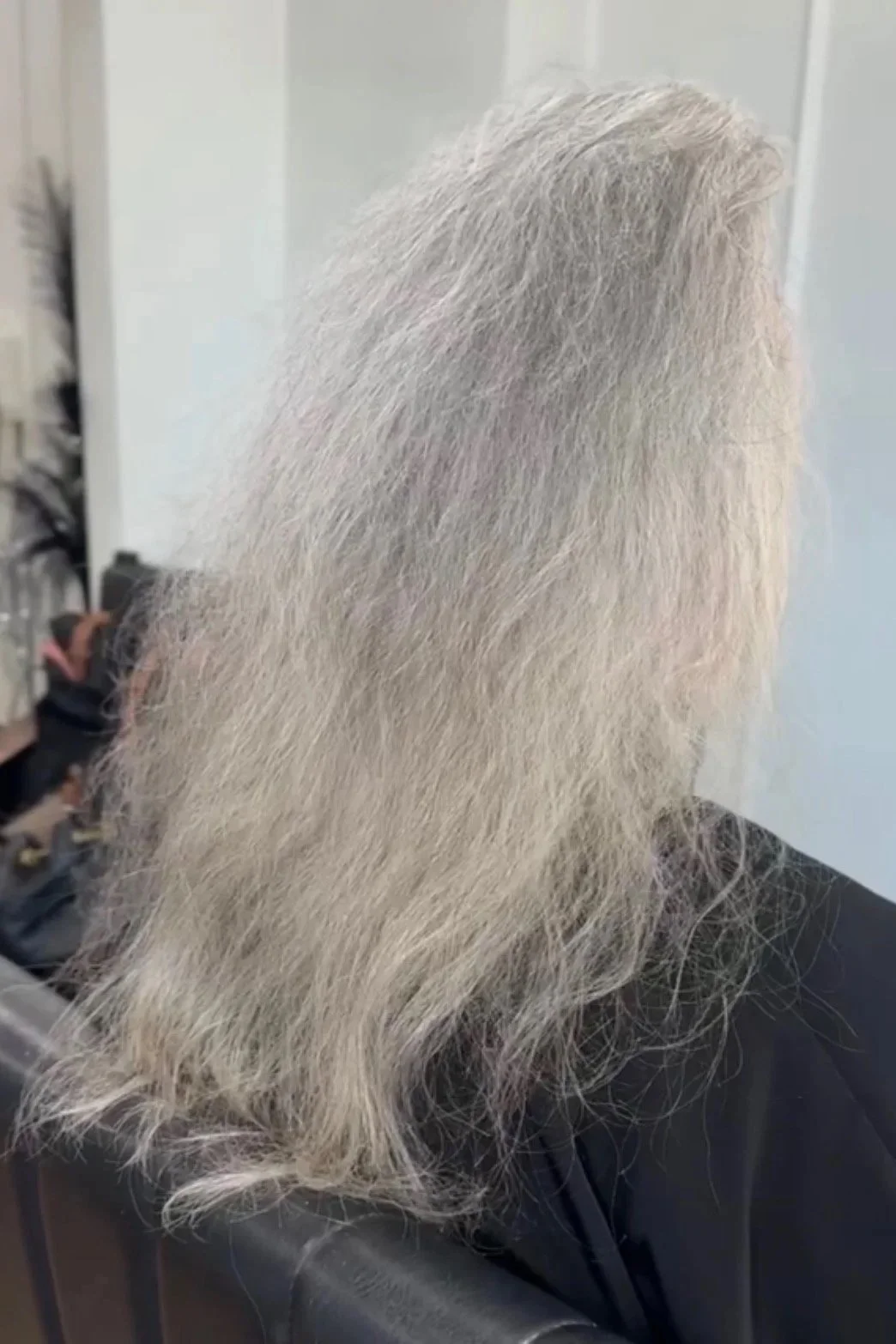
Texture changes over time—coarser in early graying, softer and “fluffier” with age.
This is why gray hair can feel contradictory:
resistant to color
but fragile in structure
and inconsistent from strand to strand
There is no “one type” of gray hair. And that variability is where everything starts.
Why True Gray Hair Is So Hard to Source
There are three core constraints:
1. Donor reality - People with fully gray hair:
often don’t have the density required for extensions
don’t grow it long enough
or aren’t willing to donate
2. Market interference - Even when gray ponytails are sourced, they are often:
colored down into cool light browns to meet market demand
permanently altered before they ever reach extension suppliers
Meaning: true gray rarely even makes it into circulation.
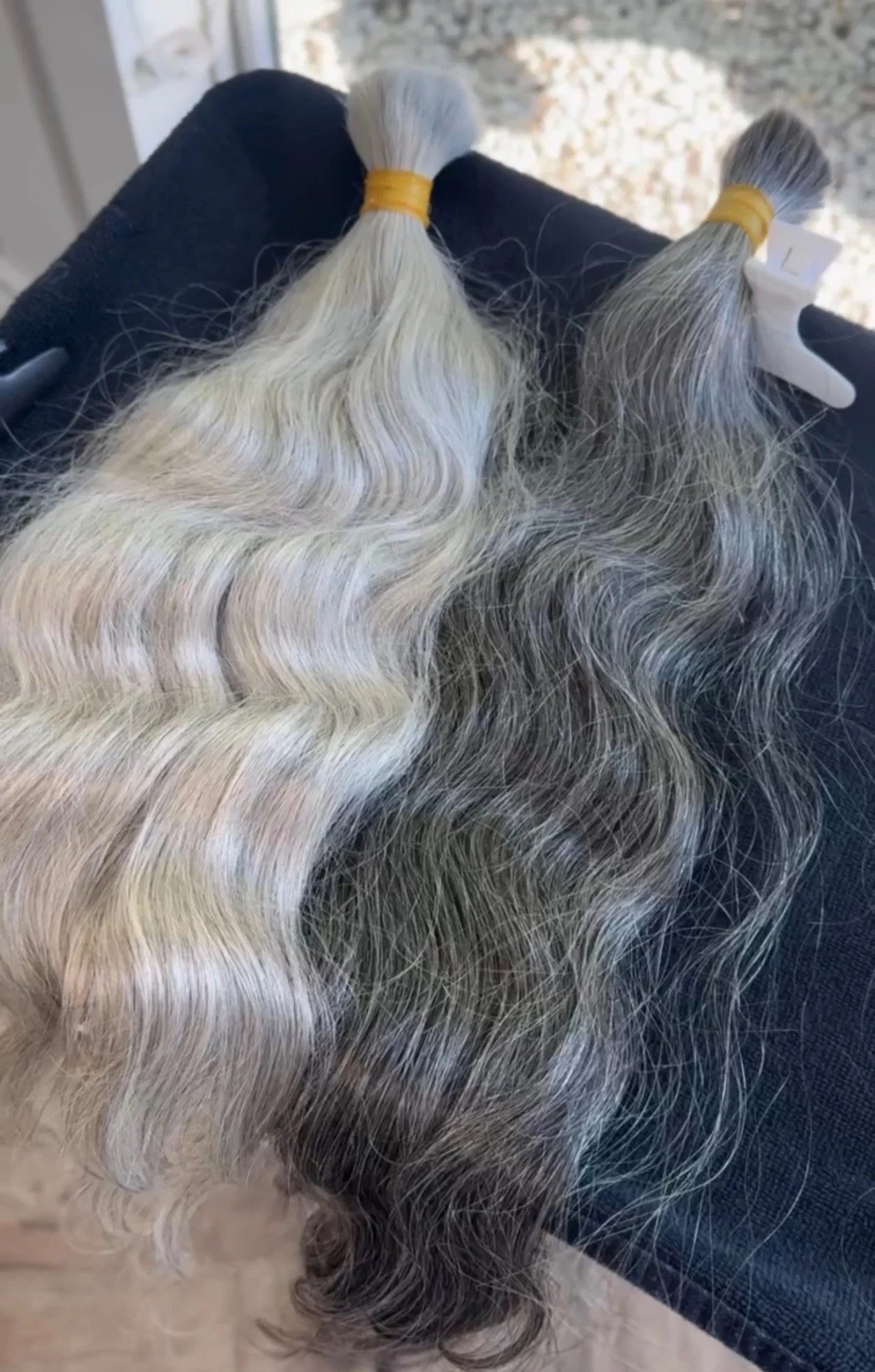
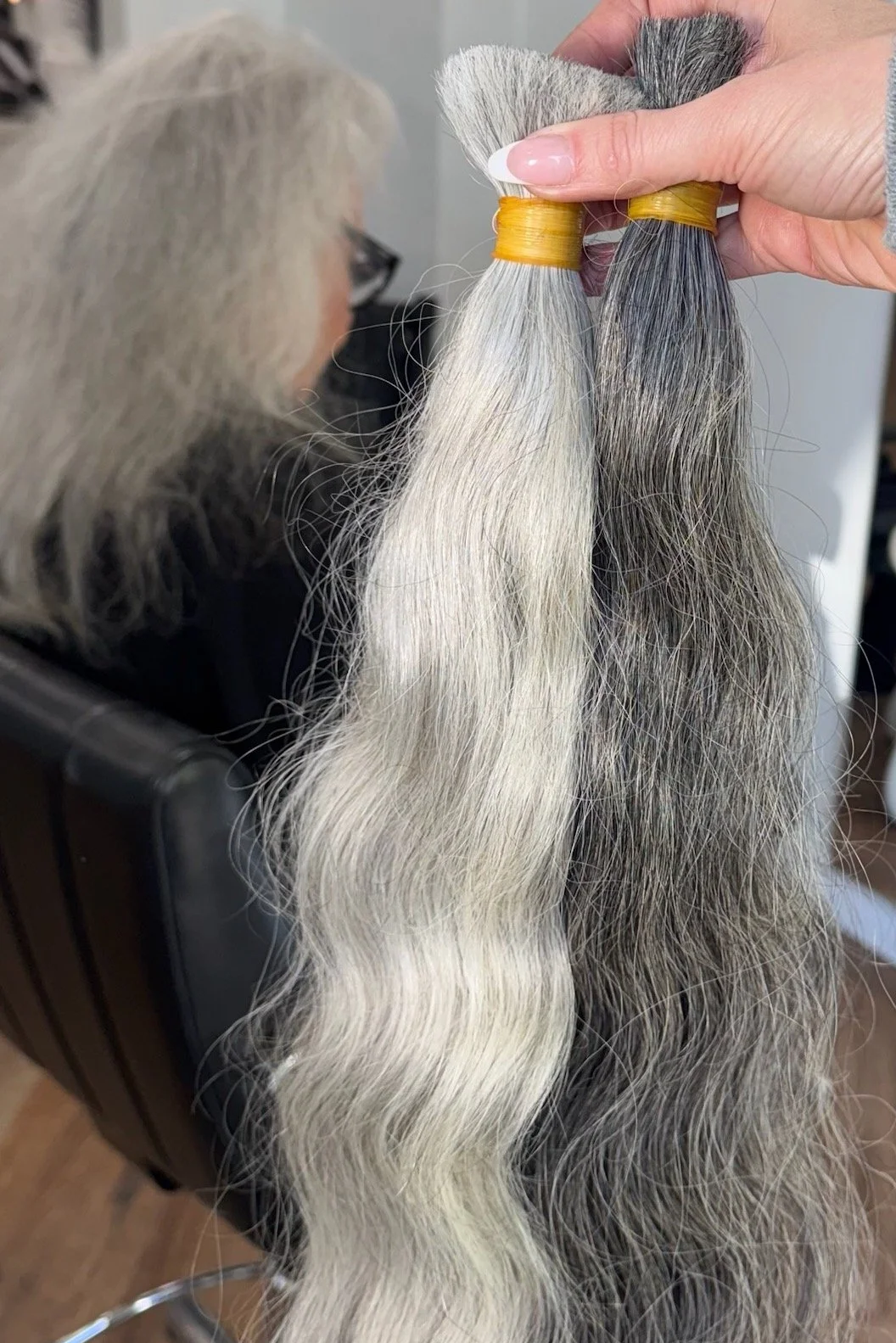
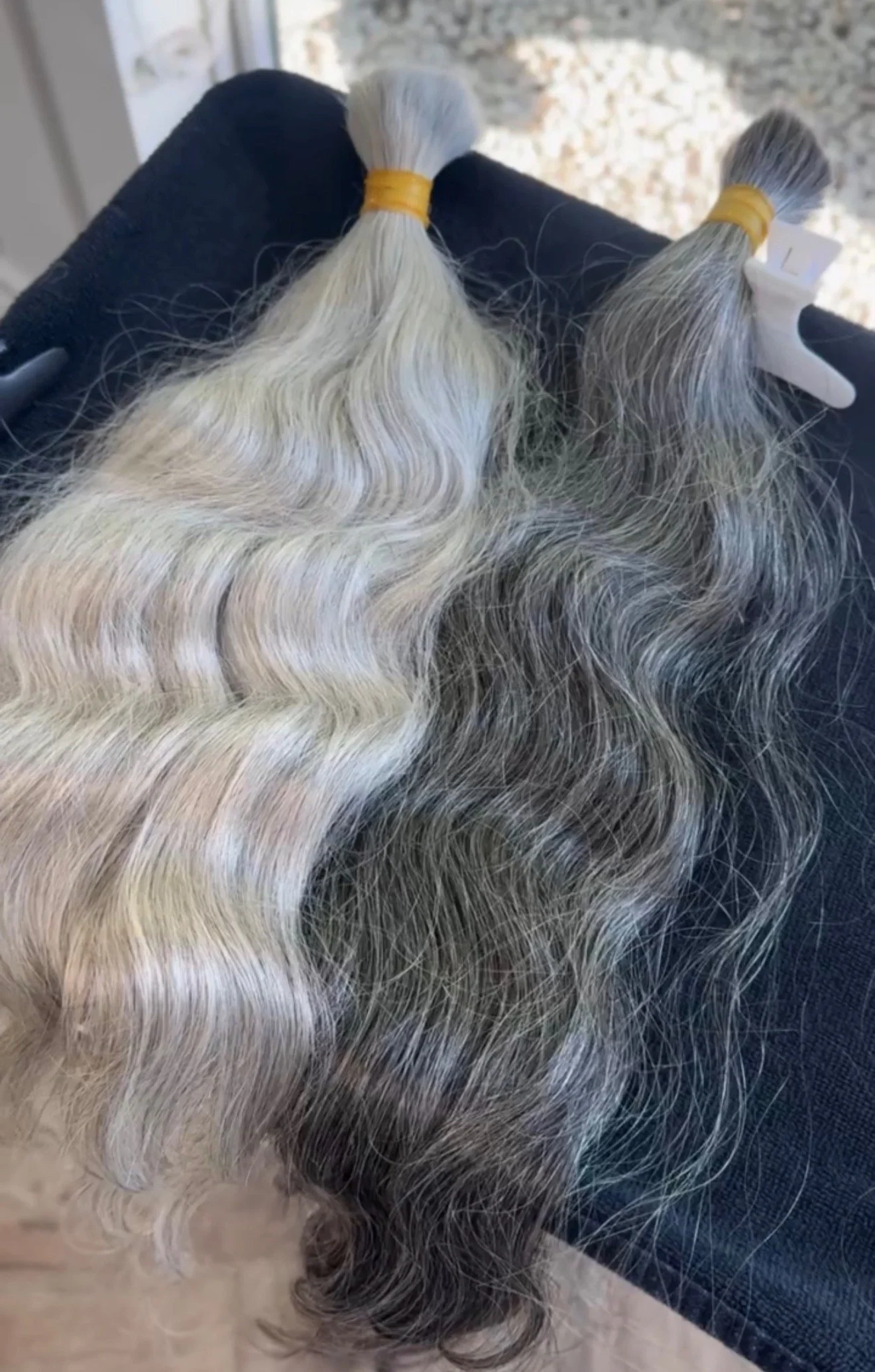
3. Natural inconsistency - No gray ponytail is uniform. Every bundle contains:
a different salt-to-pepper ratio
different underlying “pepper” tones (light brown, dark brown, etc.)
sun exposure variation at the ends
remnants of past color in some cases
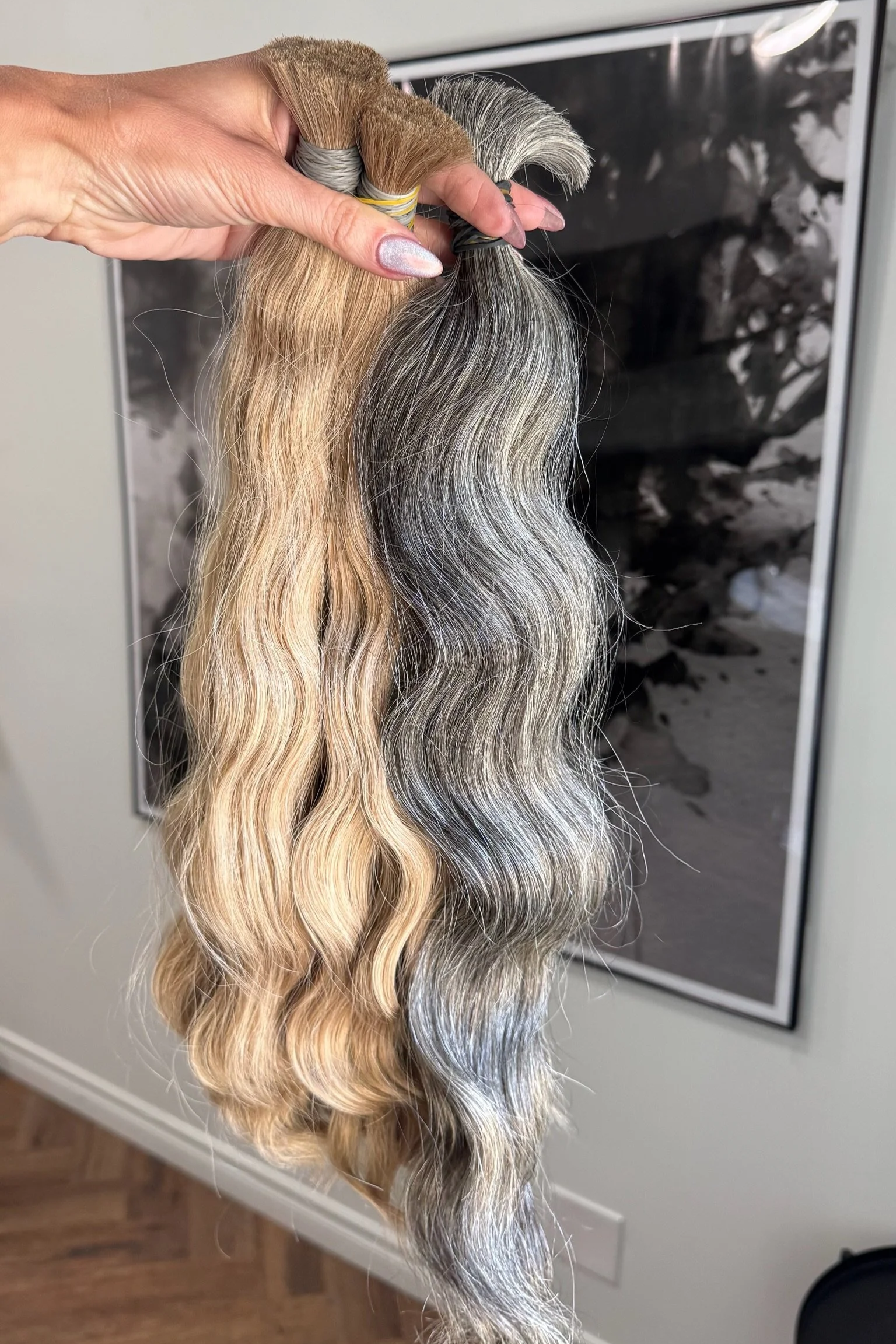
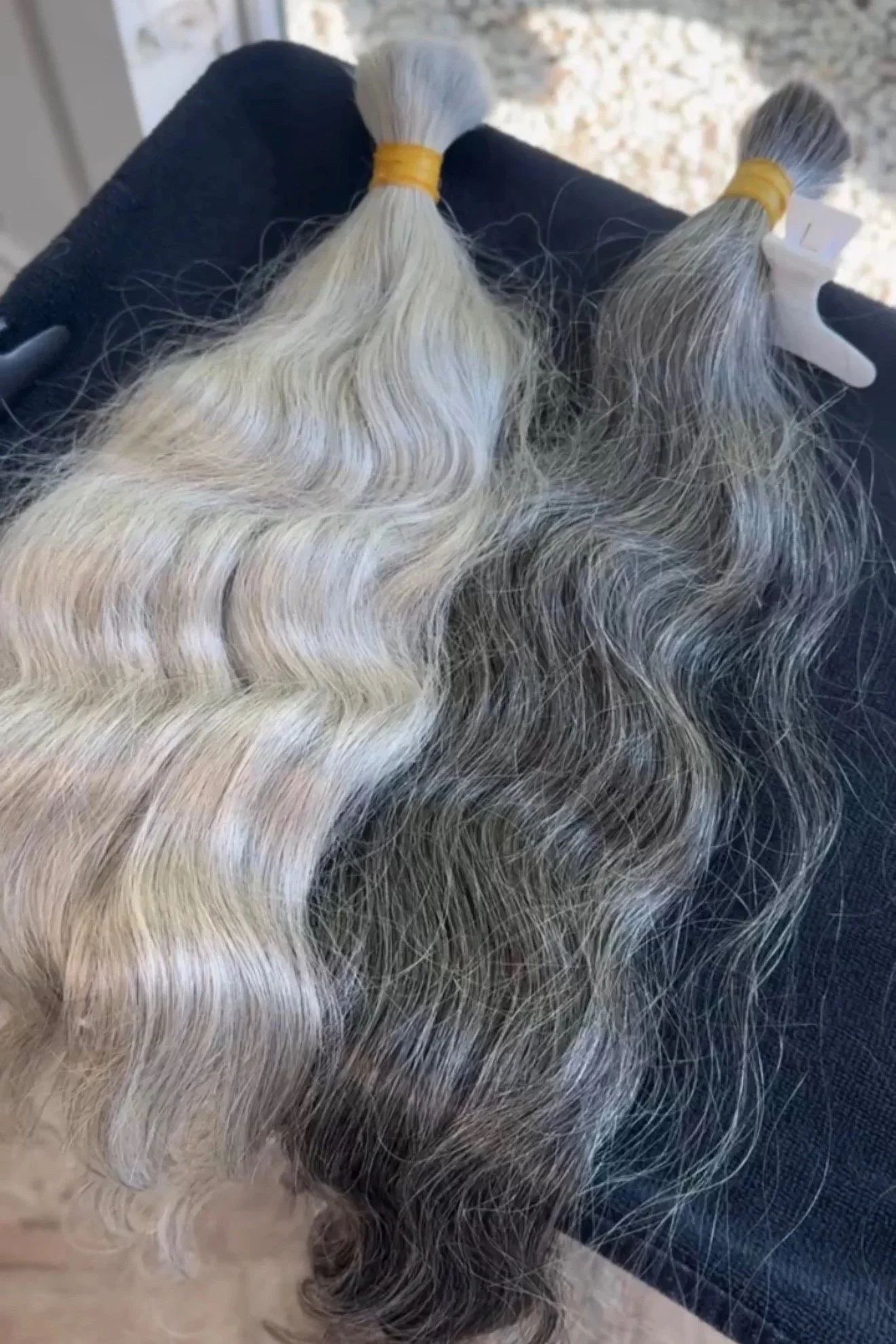
There is no standardization. Only interpretation.
Why You Cannot “Fake” Gray
Here’s the technical truth most people avoid:
You cannot replicate true gray using bleached or toned hair. Even the lightest blonde extensions:
still contain underlying warmth
still hold melanin
cannot be lifted to true white without destroying the cortex
And once you damage the cortex, the hair loses integrity, longevity and movement.
So what you’re left with is something that might look gray in one light…
but will never behave like it.
The Real Work: Zones, Not Just Color
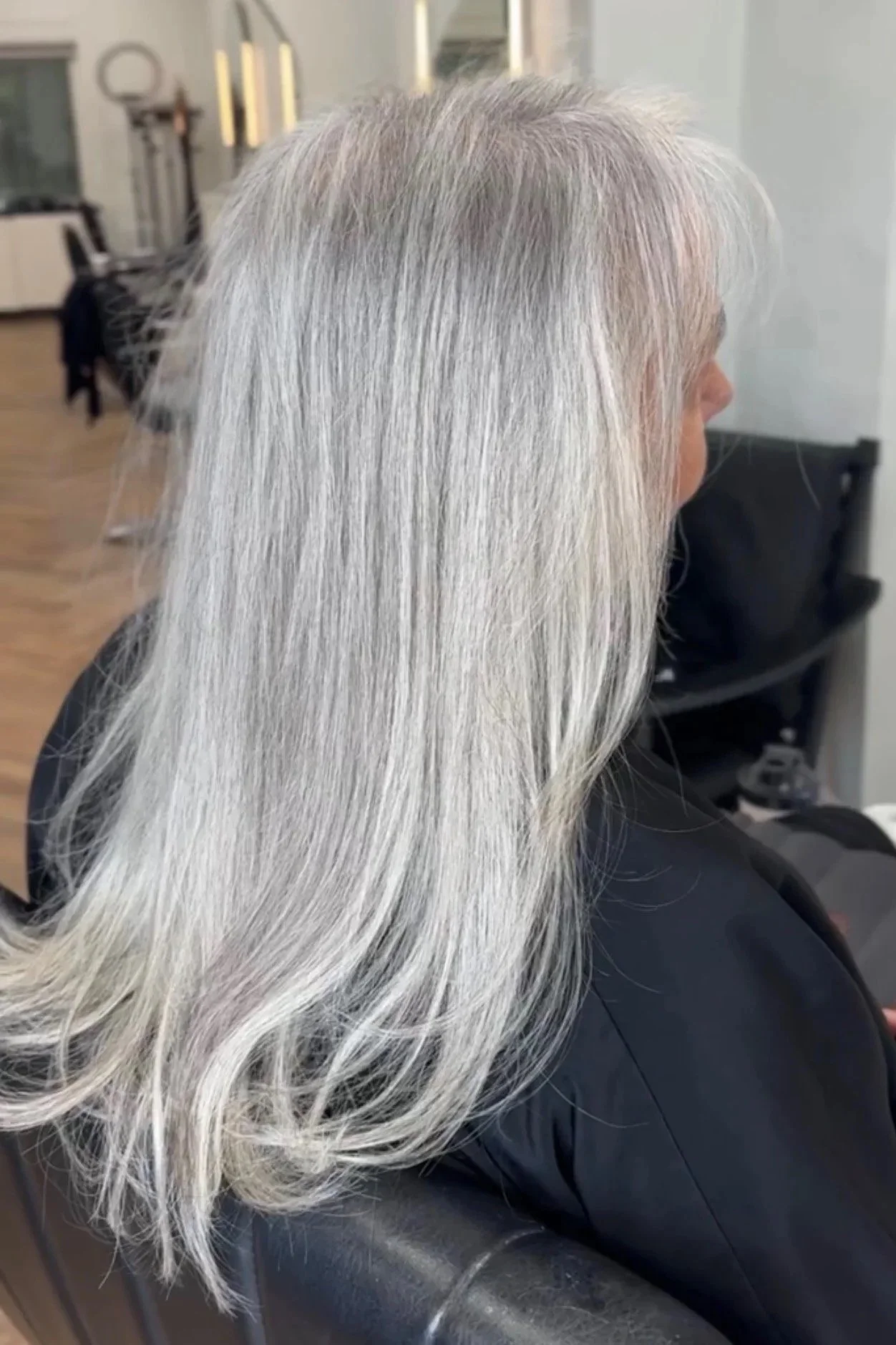
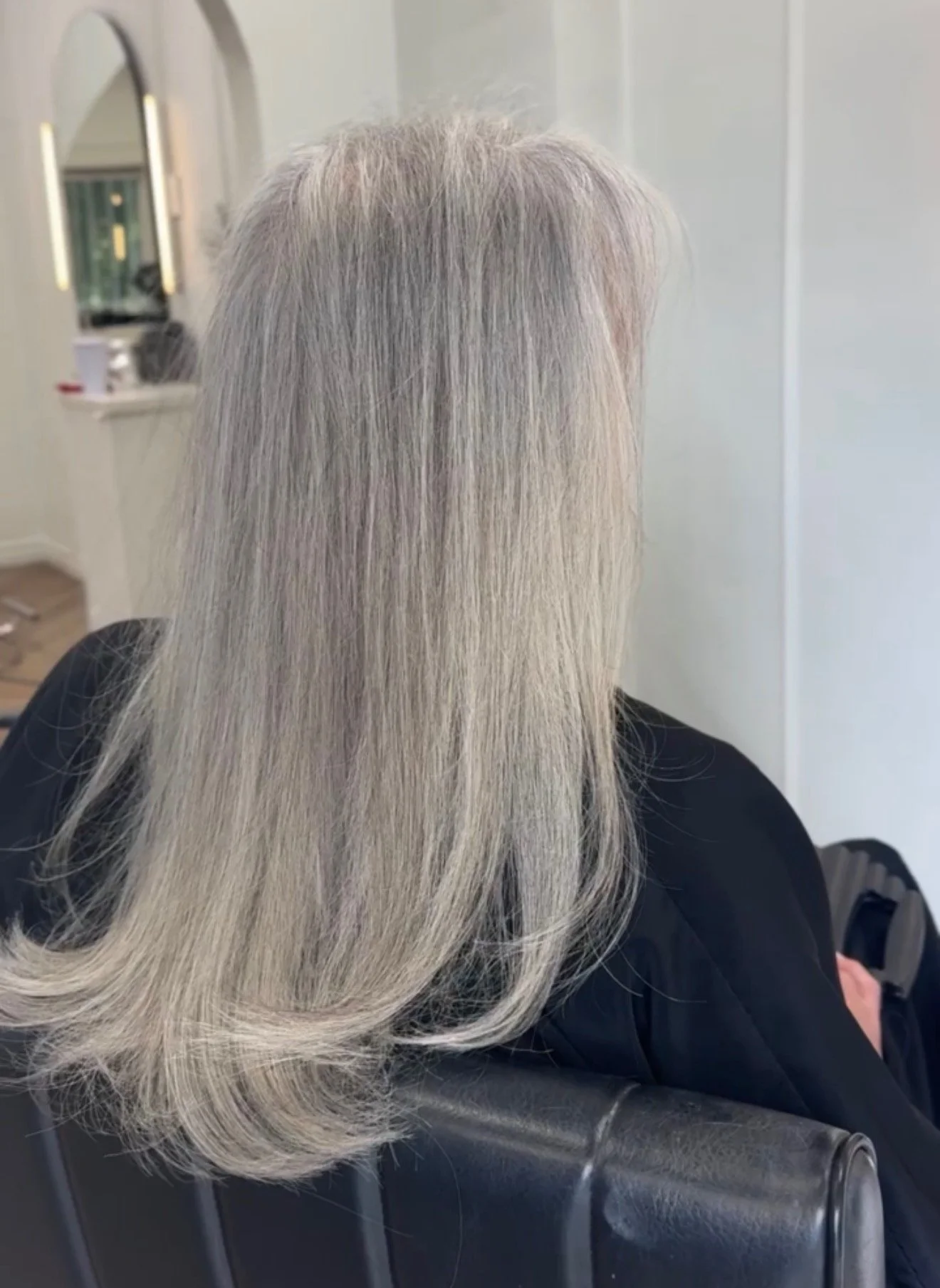
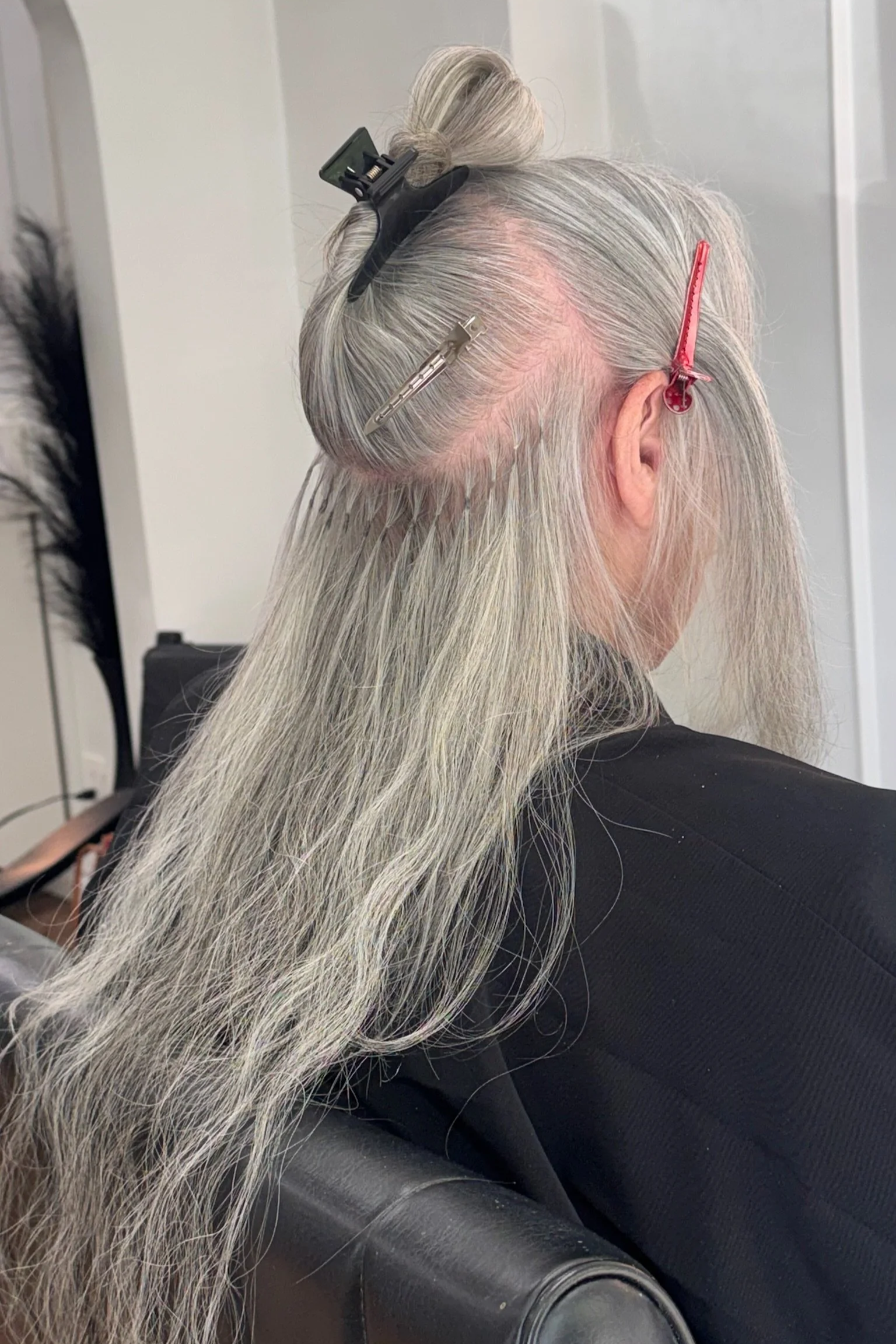
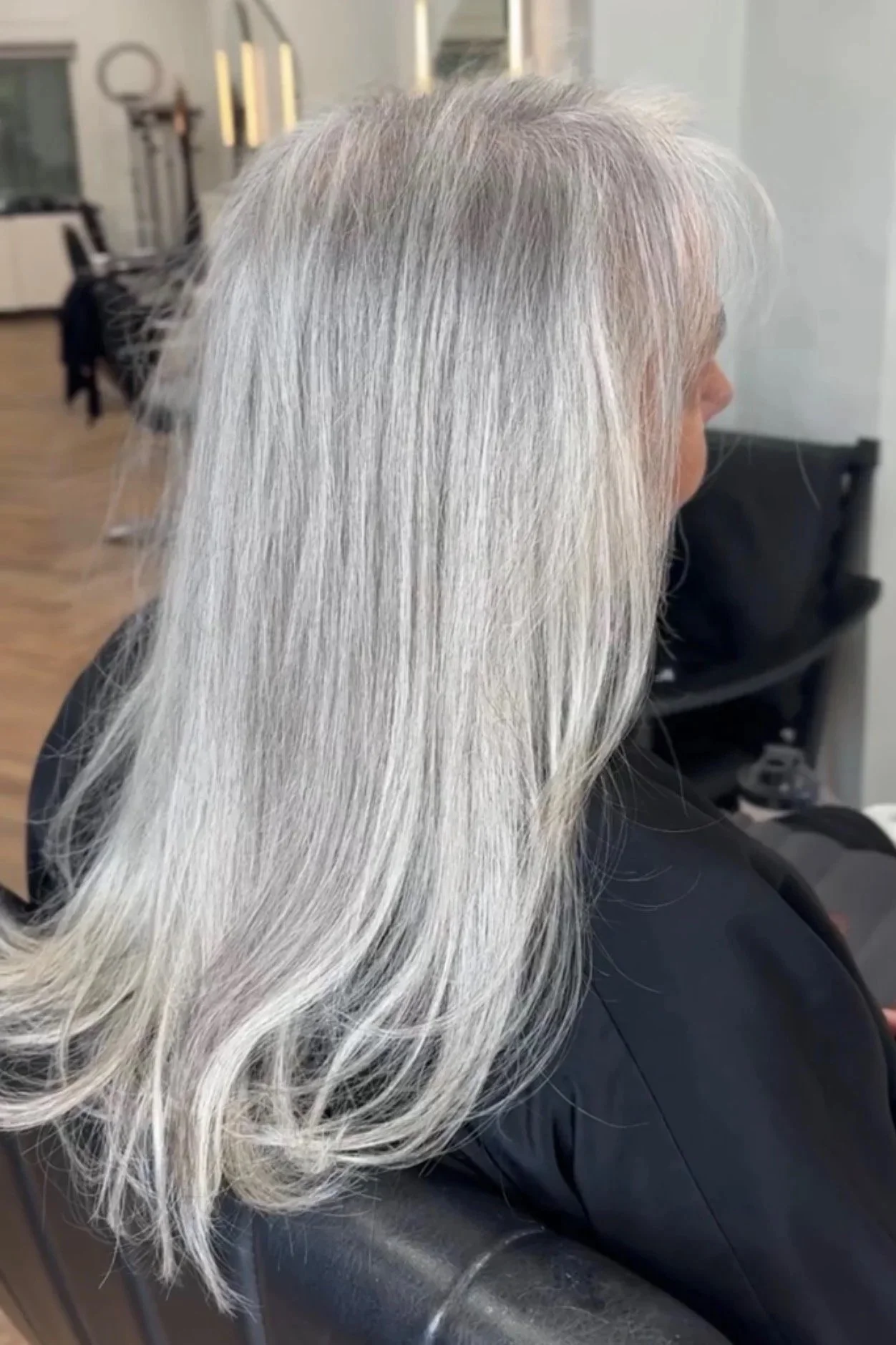
Gray matching is not just root, mid, ends. It’s also face frame, crown, nape, perimeter.
Most gray clients have:
higher white concentration around the face
more pepper in the back
Which means your install might require:
different blends in different zones
multiple wefts or mixes within the same head
A single “50/50 gray blend” across the entire install will almost always look off.
This is one of the most common mistakes—even among experienced stylists.
Texture Matching: The Quiet Dealbreaker
While color is critical, texture is what makes or breaks the illusion.
Gray hair can range from:
soft and airy (often Russian)
to coarse and resistant (often Indian)
If the texture is off:
blending becomes reliant on styling (which is a red flag)
movement looks unnatural
the install becomes visible over time
In practice: If you had to choose, texture can carry a slightly imperfect color. Color cannot fix the wrong texture.
Installation: Visibility Is the Risk
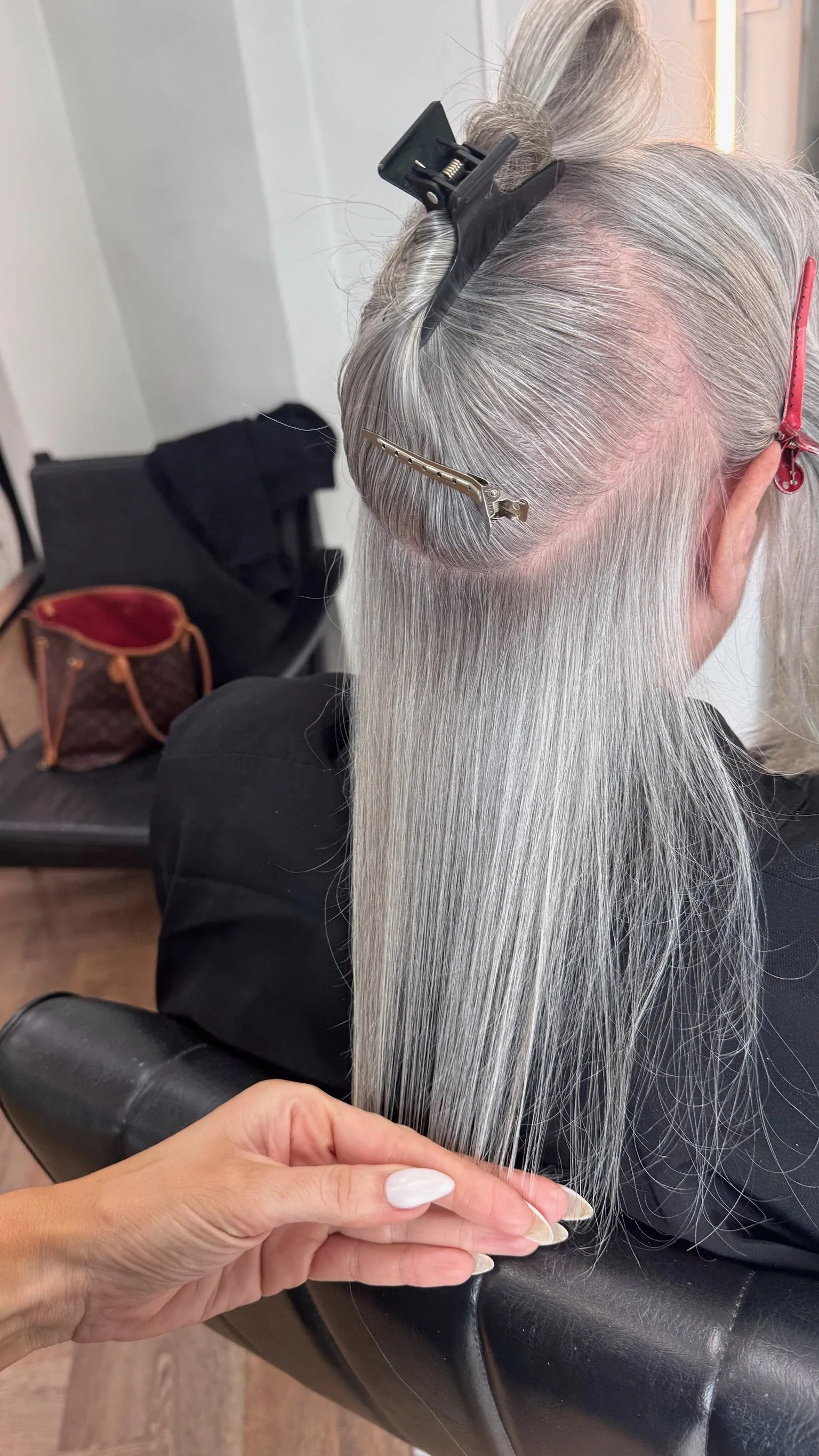
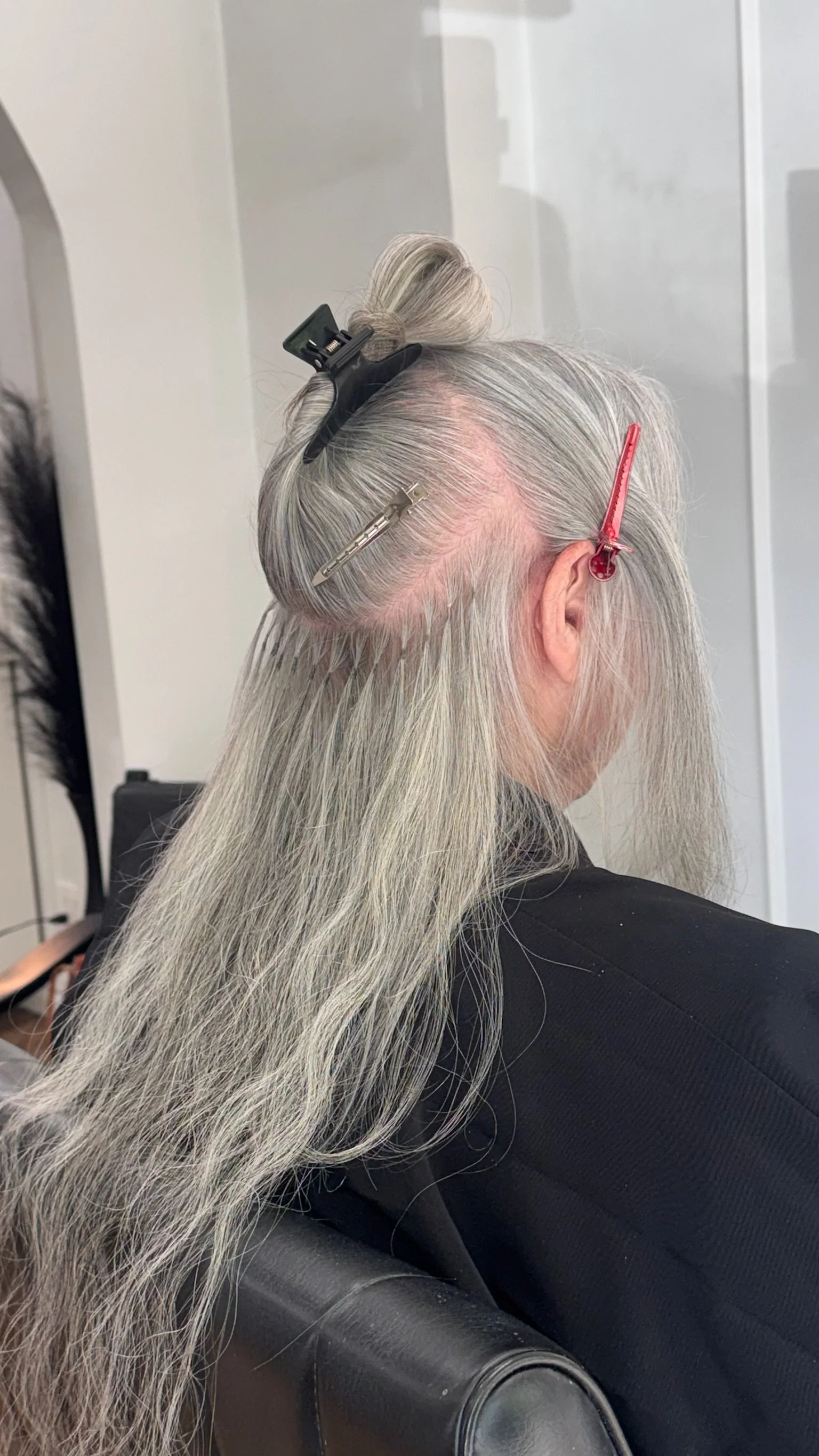
Gray installs don’t fail because of slippage or breakage. They fail because they’re visible.
Gray hair is often more translucent, which means: placement matters more, roots must be exact, and bulky installs will show.
Examples:
Wefts placed too high = visible
Poor root match = immediate giveaway
Overloading density = unnatural separation
In many cases, method selection shifts:
K-tips for flexibility and movement
more conservative density loading
hyper-intentional placement
Blending: If It Needs Styling to Work, It Doesn’t Work
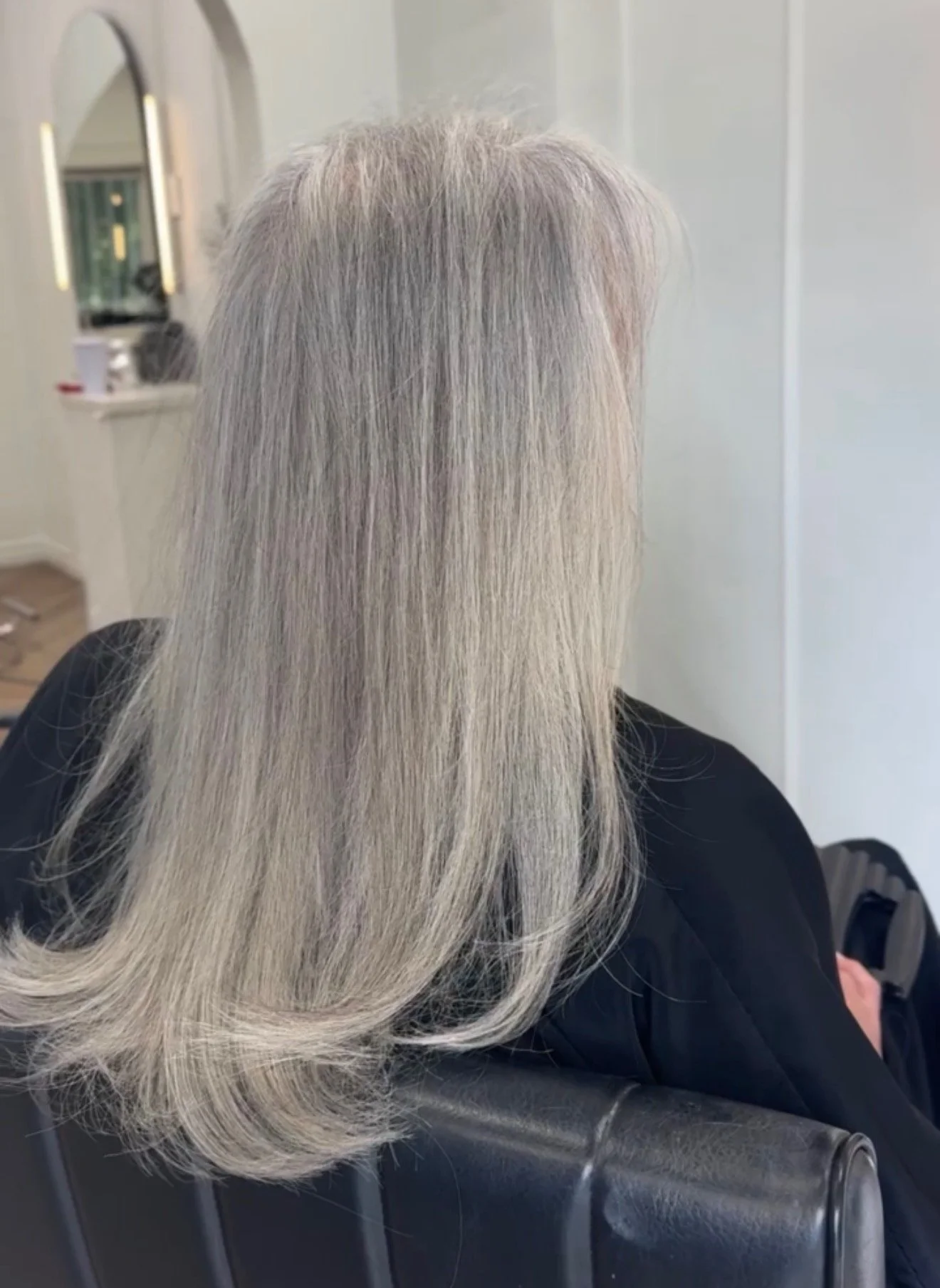
Blending should not depend on heat.
A correct install should: blend wet, blend air-dried, and blend before styling.
If you need curls to hide the work, something upstream is off: color, density, or texture.
Kashmir POV:
no razors (protect the cuticle)
minimal texturizing
precision cutting only
The goal is longevity, not a temporary visual fix.
Maintenance: Surprisingly Low, If Done Right
True gray hair actually requires less maintenance than most expect.
Because there’s no color to fade, no glossing required and no tonal correction (outside of optional purple shampoo).
What does affect gray:
UV exposure
heat
hard water
environmental buildup
And the biggest risk? Improper toning. One incorrect toner can:
permanently shift the pepper tones
introduce warmth
destroy the natural blend
In many cases, this damage cannot be reversed. This can be done with too high peroxide levels in the developer choice for toners.
Kashmir Gray: What Makes It Different
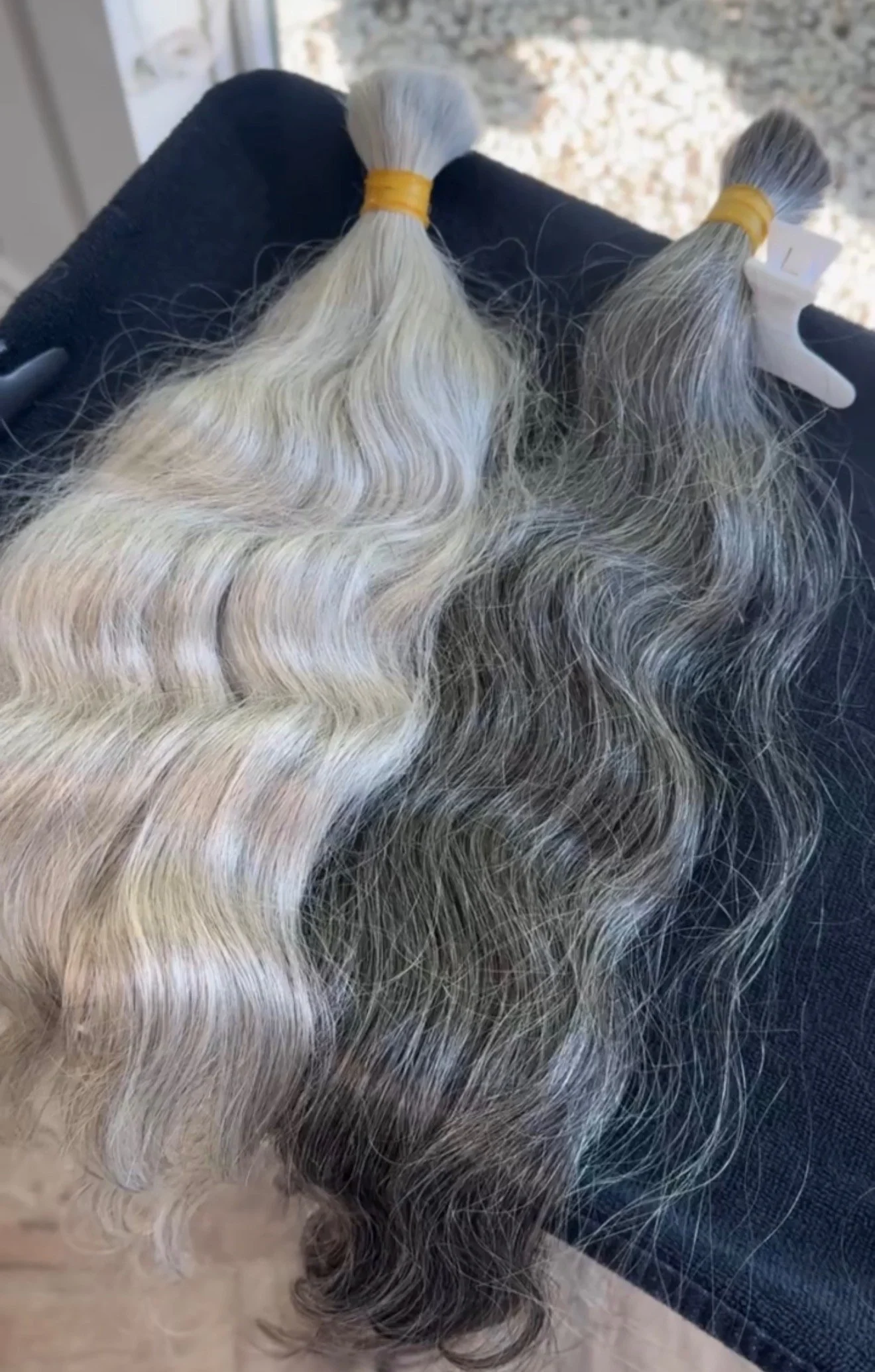
Kashmir gray is built around restraint and sourcing discipline:
True gray ponytails sourced before market alteration
Minimal to no processing
Cuticle integrity preserved
Offered on Genius Weft (rare in the gray space)
Most gray on the market exists as loose ponytails or limited K-tip offerings,
Kashmir is one of the only brands integrating:
multiple gray blends
into a weft format designed for real installs
The Biggest Mistakes Stylists Make
Even experienced stylists:
formulate too dark, too warm, or too cool
ignore zone-based blending
use a single gray ratio across the entire head
overpromise results
attempt to mimic gray with non-gray hair
And the biggest one: Trying to make non-gray hair behave like gray. It will not.
The Three Non-Negotiables
If you take nothing else from this:
1. Assess zones, not just color
Gray lives differently across the head.
2. Use real gray whenever possible
Even partial integration is better than none.
3. Underpromise everything
This is one of the hardest services in extensions.
But when done right? You become the stylist who did what no one else could.
Gray extensions are not scalable. They are not predictable. And they are not something you can shortcut.
The best results come from:
patience
sourcing
and saying no when needed
Because at a certain level of work: If it’s not real gray, it’s not going to look right.